
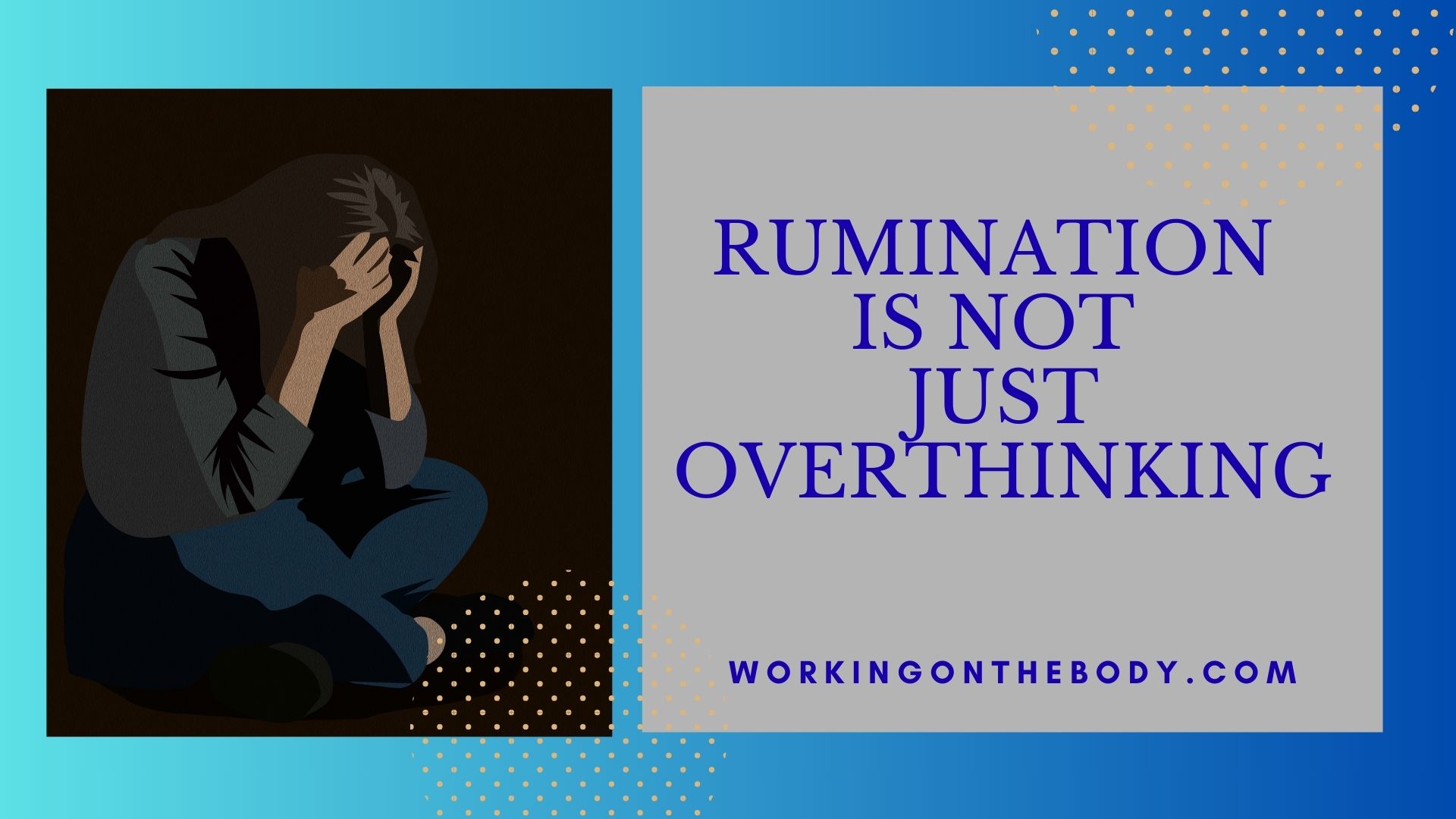
Rumination after a breakup can feel compulsive and overwhelming. You may understand perfectly well why the relationship ended, yet still find yourself replaying conversations, analysing what happened and wondering what you could have done differently.
Relationship rumination is not simply overthinking. When thoughts about an ex or a past relationship keep returning despite your efforts to move on, something emotionally significant may still feel unresolved.
I am Sally Baker, a senior therapist specialising in memory reconsolidation. I work with people who understand their difficulties intellectually but find that insight alone has not changed how they feel.
Rumination long after a romantic relationship ends is a common reason people feel stuck after a breakup. Thoughts can loop relentlessly, leaving little room for anything else. People replay old conversations in an endless search for insight, explanations, or greater understanding.
At the same time, the same questions and ‘what ifs’ occupy emotional bandwidth, even when the reasons for the breakup are intellectually understood. Despite this understanding, the mind refuses to move on.
This experience is often misunderstood. Other people may think you are overthinking or grow weary of what they see as an inability to move on. But rumination is rarely simply a problem of thought, a lack of willpower or personal resilience. Instead, it can signal that something about the loss still feels emotionally unresolved.
When a relationship ends, especially one of deep emotional significance, the loss is not only about the physical absence of another person. Intimate relationships can become part of how we regulate our emotional states and experience familiarity, connection and safety.
This can also happen in toxic relationships. Chaos, arguments, reconciliation and heightened sexual energy can form a repeating pattern. Even stomach-churning unpredictability can eventually become familiar.
When that relationship ends, losing this familiar pattern can create considerable emotional distress. The mind then searches for certainty.
Why do I keep thinking about my ex?
Rumination can be an attempt to relieve distress by finding an explanation for what happened.
Why did they leave? What did I miss? What should I have done differently? Did they ever really love me?
What if I had said something different? What are they doing now? Has somebody else replaced me?
The difficulty is that another round of thinking rarely provides the emotional resolution the person is seeking.
This is why someone can understand the breakup perfectly well analytically and still feel emotionally stuck. Intellectual insight and emotional resolution are not necessarily the same thing.
Why can’t I stop ruminating after a breakup?
Trying to force yourself to stop thinking about someone can sometimes have the opposite effect. The more urgently you tell yourself not to think about them, the more significant those thoughts can begin to feel.
You may also have already discussed the relationship repeatedly with friends, analysed your ex’s behaviour, read about attachment styles, recognised unhealthy relationship patterns and understood why the relationship could not continue. You may even be relieved you’re no longer with this person for all the best reasons, and still you think about them.
That apparent contradiction is important. What remains unresolved is how the experience feels.
Can relationship rumination be connected to earlier experiences?
Sometimes relationship rumination echoes earlier experiences of loss, rejection or emotional instability. For example, when childhood involved emotional chaos, divorce, fear, shame, inconsistent caregiving or an absence of reliable unconditional care, a child may develop powerful expectations about relationships.
Connection may come to feel fragile. Other people may seem unreliable. Love may feel conditional. Separation may carry a particularly intense emotional charge. Those patterns can remain largely outside conscious awareness until a significant relationship ends years later.
The emotional response to the breakup can then feel disproportionately intense. The person is responding to what is happening now, but an older emotional pattern may also be activated. This can help explain why telling yourself that you ‘should be over it by now’ achieves so little.
Rumination can keep the relationship alive
Constantly thinking about an ex-partner can also preserve a final form of connection. However painful, thinking about someone keeps them psychologically present.
This is a difficult paradox. You desperately want the rumination to stop, while another part of you experiences letting go of those thoughts as another loss. If the relationship occupied an important place in your life and identity, letting go of the constant overthinking can feel like severing the final thread connecting you to that person. Rumination may therefore delay confronting the full reality of the loss.
It can also preserve a version of yourself that existed within the relationship. Even when repeatedly thinking about past events feels like mental torture, those thoughts can temporarily protect you from confronting an unfamiliar future. Recognising this dynamic can help shift the response to rumination from shame towards curiosity.
Instead of asking, ‘What is wrong with me?’, a more useful question may be, ‘What does my mind still believe it needs from this?’
Why talking about a breakup does not always stop rumination
Talking can be enormously valuable. Being heard and making sense of what happened can be an important part of recovering from the end of a relationship. But at some point, repeatedly retelling the story produces no further change. You know what happened. You know why it hurt. You may even understand why your former partner behaved as they did. Yet the emotional charge remains. At this point, accumulating more explanations may give the mind more material to analyse.
This is why some people can spend months or even years thinking and talking about a past relationship without experiencing the fundamental shift they expected. The issue is no longer necessarily finding a better explanation. It’s about helping emotionally charged memories and beliefs feel like they belong in the past.
How I work with persistent relationship rumination
My Deep Therapy approach does not focus solely on repeatedly analysing the relationship story. Instead, we explore the emotional patterns, memories and beliefs that continue to carry charge.
This can include earlier experiences that have become connected with the current loss, self-blame, rejection, abandonment, shame or beliefs about what the ending of the relationship means about you.
The aim is not to erase the relationship or persuade you that it did not matter. It is to change the emotional response attached to what happened so that remembering no longer feels like reliving.
I use several therapy approaches, including Orpheus Mind Technology memory reconsolidation, in this work. Memory reconsolidation describes the process through which an existing emotional learning can be updated when new information is experienced under the right conditions. For someone who already understands their problem intellectually, this distinction can be particularly important.
What can happen when the emotional pattern changes?
One client came to therapy because he could not stop thinking about a painful breakup. He was experiencing intrusive thoughts and considerable anxiety and found it difficult to concentrate on work or activities he had previously enjoyed. He described it as though all the colour had drained from his life, leaving everything monochrome and flat.
As we worked together, connections emerged between the intensity of his current response and experiences from a difficult childhood in which love and comfort had frequently felt conditional on him displaying ‘perfect behaviour’. The work was not about convincing him that the breakup was a good thing.
It was about experiencing previously disconnected emotional information in a different way. As that happened, the intensity surrounding the relationship began to reduce. He became calmer and less emotionally attached to repeatedly revisiting the painful memories.
Therapeutic work may involve balancing memories, reducing self-blame, and examining beliefs tied to the end of a relationship.
This is not positive thinking. It is emotional updating.
Does relationship rumination eventually stop?
It can. One change people may notice is that thoughts that once felt persistent begin to quieten without requiring the same effort to suppress them.
Memories can lose their sharp intensity. The compulsive urge to revisit past conversations can fade. Increasingly, the relationship becomes something that happened rather than something that is still happening internally. That distinction matters.
Moving on does not require forgetting someone, denying what happened or deciding that the relationship was unimportant. It means remembering without continually being pulled back into the same emotional loop.
When should I consider therapy for relationship rumination?
There is no fixed amount of time after a breakup when somebody ‘should’ have moved on. However, it may be worth seeking help when persistent thoughts about a former relationship are interfering with your work, sleep, concentration, other relationships or ability to enjoy your life.
It may also be relevant when you have already spent considerable time analysing what happened and understand it intellectually. Still, that understanding has made surprisingly little difference to how you feel. That is often the point at which doing more thinking is unlikely to provide the answer.
Why Sally Baker is qualified to help
I am a senior therapist with more than 25 years’ experience working with trauma, relationship difficulties, anxiety, overwhelm and persistent emotional patterns.
My work focuses particularly on people who are capable and high-functioning but experience responses that insight and conventional coping strategies have not resolved.
I use Deep Therapy and memory reconsolidation approaches to address the emotional learning underlying persistent patterns, rather than simply teaching people how to manage symptoms.
My work with relationship rumination has also been featured in Women’s Health, which documented the experience of a client I worked with following a distressing breakup.
Therapy for relationship rumination
If you are stuck thinking about a past relationship, not being able to reason yourself out of it does not necessarily mean you need more insight. You may already understand exactly what happened. The work may instead be about changing what the experience still means and how strongly your mind and body respond to it.
My Deep Therapy programme is designed for people who want to work at that deeper level rather than continually manage the same recurring thoughts and emotional responses.
If you want to find out whether this approach is right for you, you can book a 30-minute discovery call with me.

